What is an agent?
Artificial intelligence is evolving quickly. Very quickly.
But beyond models and conversational interfaces, a more profound shift is taking place:
- the transition from AI that responds… to AI that acts.
This is precisely where the concept of an agent comes in.
In this article, we explain in simple terms what an agent is, what it is actually used for, and why it is becoming central to modern business applications.
The straightforward answer!
An agent is an AI-based system capable of understanding an intention, making decisions and carrying out actions to achieve a goal.
In plain terms:
-
it doesn’t just respond.
-
it can carry out a sequence of steps.
-
it interacts with business tools and systems.
-
it operates within a defined framework.
We can summarise it simply:
The user expresses a need, the agent understands the objective, plans the necessary actions, interacts with the relevant systems and produces a result.
Without an agent, AI responds. With an agent, it works.

Why agents are becoming essential
A traditional AI model performs very well at generating text or answering questions.
But it remains limited:
- it does not take action,
- it does not take the initiative,
- it does not integrate naturally into a workflow.
An agent allows us to take this step further.
It transforms AI into an active component of the information system.
And that is where real value is created.
How does an agent actually work?
Let’s take a simple example.
The user makes a request:
“Generate a monthly sales report and send it to the team.”
The agent understands the objective
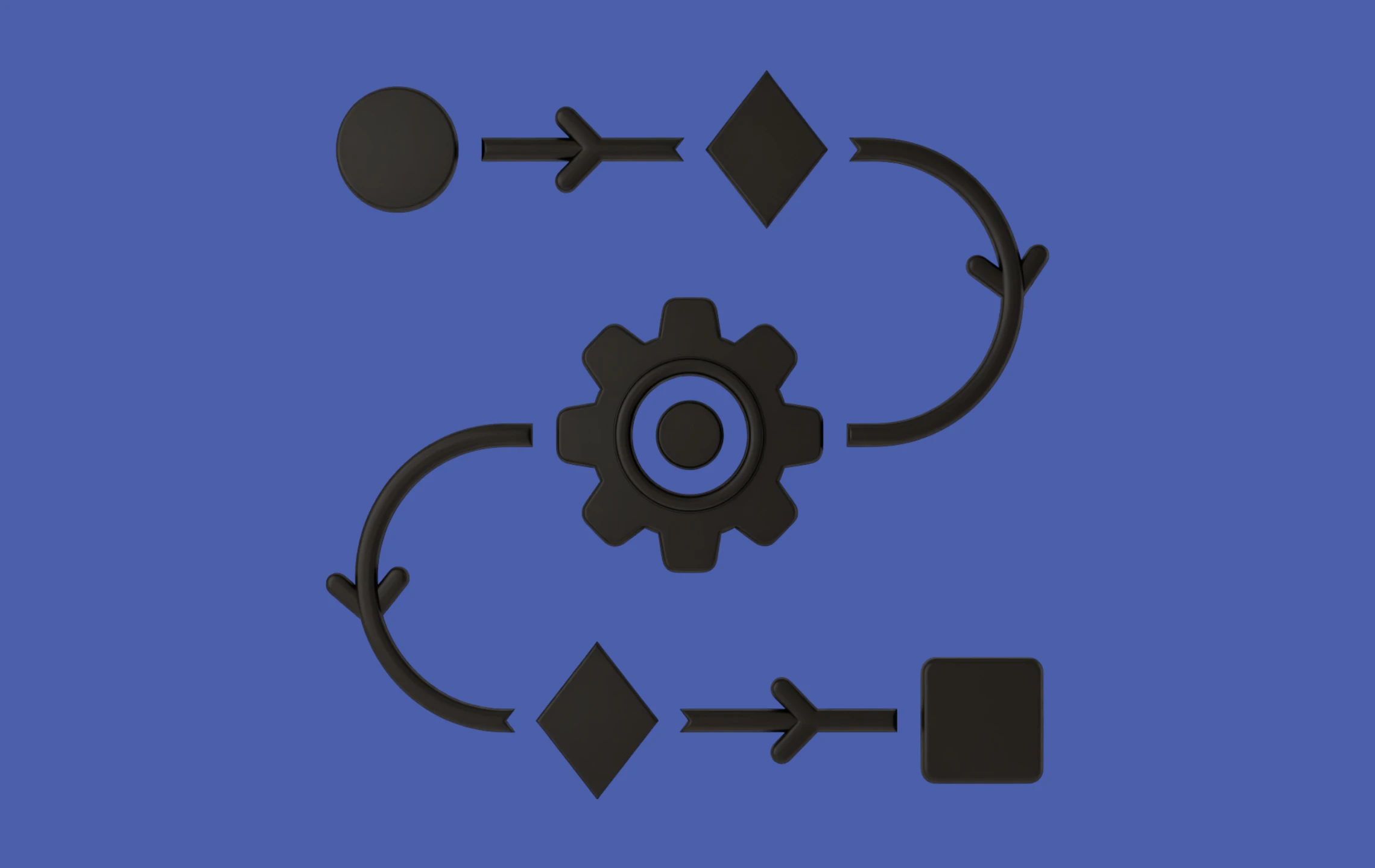
It identifies the necessary steps:
- retrieve the data,
- structure it,
- generate a report,
- send it to the right people.
The agent takes action
It will:
- query the databases,
- apply business rules,
- generate the document,
- send the email.
The AI reports back
“The report has been generated and sent to the sales team.”
The agent does not merely respond. It executes a coherent sequence of actions.
The link with MCP servers
An agent never acts alone.
To function properly, it needs access to data, tools and business systems. Above all, it must do so within a secure and controlled environment.
This is precisely the role of the MCP server.
The agent “decides” what to do. The MCP server enables it to do so correctly.
In practical terms:
- the agent identifies the action to be taken,
- the MCP server queries the relevant systems (ERP, CRM, APIs),
- it applies access and security rules,
- it returns a structured response.
Without this layer, an agent remains limited or poses a risk. With it, they become truly operational.
The two are complementary:
- the agent provides intelligence and initiative,
- the MCP provides structure and control.
Concrete examples of use in business
Internal operational assistant
An employee asks:
“Prepare a summary of urgent customer requests for me.”
The agent:
- queries internal tools,
- filters the data,
- generates a summary.
The MCP server manages access and ensures that only the correct data is used.
Result: a fast, reliable and context-aware response.
Business process automation
An agent can:
- process a request,
- check conditions,
- trigger an action in an ERP or CRM.
The MCP orchestrates interactions with the systems. The agent becomes a key link in the workflow.
Intelligent information management
An agent can:
- analyse documents,
- extract data,
- classify and enrich information.
We are moving from a passive system to one capable of acting on its own data.
Why it is not just a technical matter
Implementing a bot isn’t simply a matter of adding AI.
It means introducing a system capable of taking action within your organisation.
This involves:
- defining what the agent can do,
- supervising its actions,
- ensuring traceability,
- guaranteeing consistency with existing processes.
In other words:
You don’t simply add an agent ‘on top’ of a system. You integrate it into a controlled architecture.
Common mistakes to avoid
Confusing an agent with a chatbot --> A chatbot responds. An agent acts. The difference is fundamental.
Giving the agent too much freedom --> Without a framework, actions become difficult to control. The MCP plays a key role here as a safeguard.
Neglecting business integration --> An agent without access to the right systems remains limited. The value comes from the connection to existing tools.
Agents and data governance
In a Swiss or European context, data governance is essential.
An agent + MCP architecture allows you to:
-
precisely control accesses,
-
trace actions,
-
secure exchanges,
-
keep the data on the client side.
The agent acts. The architecture ensures that this remains under control.
In summary
An agent is a system that enables artificial intelligence to understand an objective and carry out actions to achieve it.
It transforms passive AI into an active component.
But it is its combination with an architecture such as the MCP server that makes it truly useful, reliable and controlled.

So what now?
If you’re considering integrating AI into your tools, the question is no longer simply:
“Which AI should we use?”
But rather:
“What actions must it be capable of performing?”
And above all:
“How can these actions be integrated into your system?”
This is often where the success of a project hinges.
At Dexio, we design agents integrated into business systems, relying on robust architectures to ensure their usefulness, security and control.